When a Tool Becomes a Platform
Browse the awesome-claude-plugins registry for five minutes and you’ll find something that reframes the MCP governance conversation entirely. Developers aren’t building productivity accessories around Claude Code. They’re building infrastructure: autonomous agents that own feature development workflows, generate comprehensive documentation, run load tests, and connect to production error signals, all coordinated through MCP as the common substrate. The ecosystem has already crossed the threshold from “interesting experiment” to “load-bearing platform.”
That shift creates a specific problem for engineering and security leaders. The community moving fastest with these tools is also moving well ahead of any visibility, vetting, or audit infrastructure most organizations have in place. Practitioners are composing full stacks, running five or six parallel agent sessions simultaneously, and pulling in community-built MCP servers from GitHub repositories that IT has never reviewed. The capability is real. So is the exposure.
This post maps both sides of that picture: what developers are building, where the security gaps are concentrated, and what governance infrastructure built for this environment actually looks like in practice.
The Ecosystem in Numbers: What Developers Are Actually Building
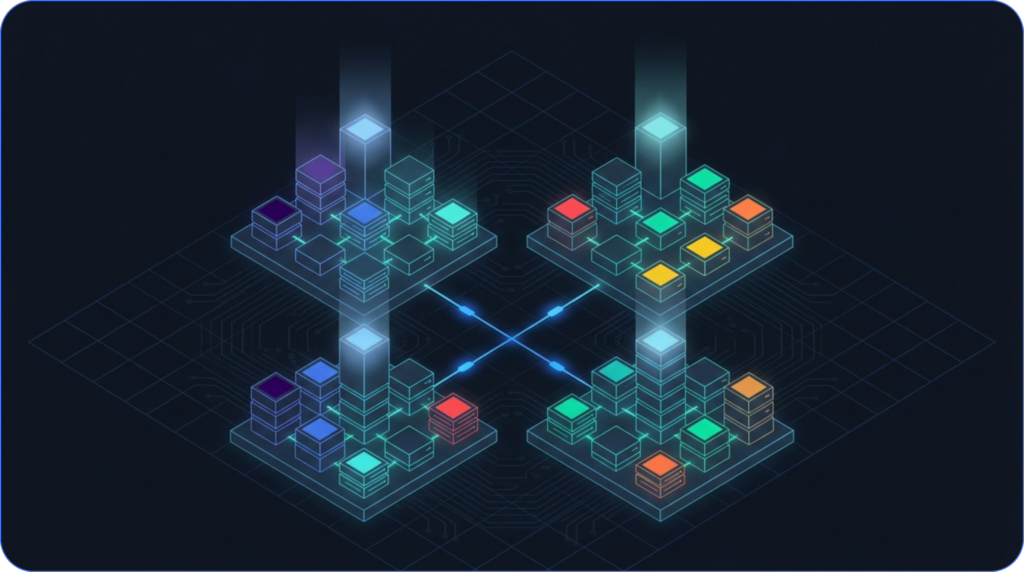
The awesome-claude-plugins GitHub registry gives a useful snapshot of where community development has landed. The catalog organizes contributions across four functional categories: software testing, data analysis, development workflow, and specialized productivity. These aren’t code completion helpers or syntax suggesters. They’re agents designed to own entire stages of the development lifecycle.
Take feature-dev, which the registry describes as a “comprehensive feature development workflow with specialized agents for codebase exploration, architecture design, and quality review.” Or codebase-documenter, built to “analyze a service or codebase component and create comprehensive documentation in CLAUDE.md files.” On the testing side, api-tester handles “comprehensive API testing including performance testing, load testing, and contract testing,” while performance-benchmarker delivers “profiling and optimization recommendations.” These tools aren’t assisting developers with snippets. They’re taking on whole problem domains autonomously.
The registry captures community creativity, including some lighter entries like joker (for when you “need to lighten the mood”). But the serious tools dominate, and their scope is striking.
The Stack Practitioners Are Actually Running
Beyond individual plugins, a DEV Community article published in March 2026 documents the convergence point sophisticated practitioners are reaching. The author’s journey through Claude Code, OpenCode, and ultimately Conductor illustrates that developers aren’t settling for defaults; they’re composing stacks.
The configuration that article identifies as the current gold standard combines Conductor as the orchestration layer, Claude Code for core agent capability, and MCP servers for specialized integrations, with Tavily (web search) and Sentry (observability and error tracking) as named components. Tavily gives Claude Code agents real-time access to external information. Sentry connects the agent to production error signals. Together, they produce an autonomous development assistant that can read live error logs, search the web for solutions, and push changes within a single workflow.
This is where the MCP governance question stops being theoretical. Each MCP server in that stack represents an external connection, a permission surface, and a potential credential exposure point. The enterprise challenge is figuring out how to bring it inside the firewall without dismantling what makes it work.
MCP Is the Nervous System of the New Ecosystem
MCP started as a tidy way to connect a model to external tools. It’s becoming the connective tissue beneath an entire generation of autonomous development tooling. The community plugins, the composed practitioner stacks, the orchestration layers sitting on top of Claude Code agents: all of it runs on MCP as the common substrate. When a tool like feature-dev hands off between a codebase explorer and an architecture agent, MCP carries that signal. When Sentry error data surfaces inside an autonomous coding workflow, MCP is the conduit.
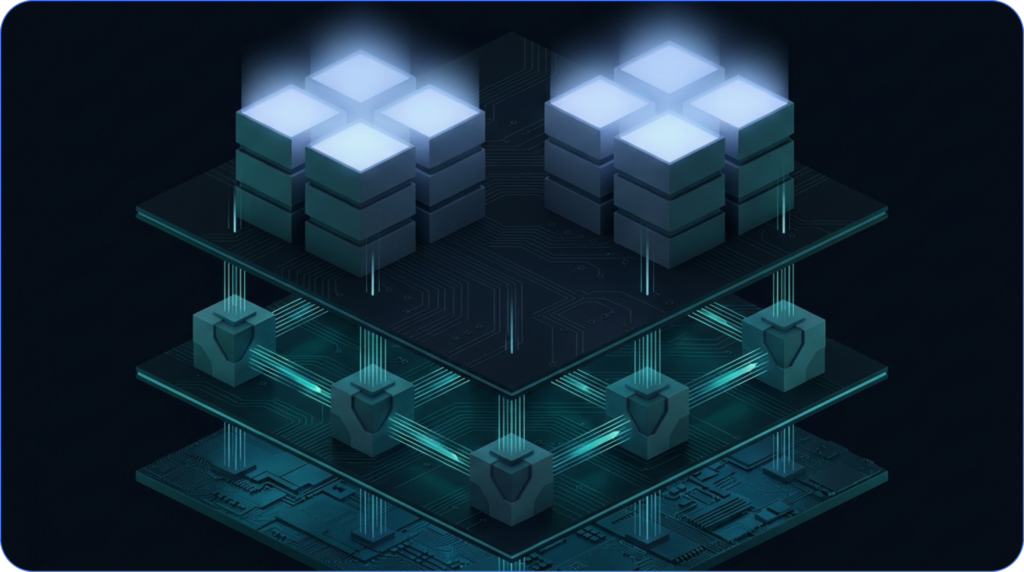
Anthropic’s own engineering team is now publishing on how to scale that substrate responsibly. Their Code execution with MCP post identifies a problem that every team building with many connected servers eventually hits: too many simultaneous tool definitions bloat the context window and drag down agent performance. Their proposed solution treats MCP servers as code APIs rather than static tool registries. The agent explores a filesystem directory, loads only the specific tools it needs for the current task, and filters data before it ever reaches the model. The emergence of this dynamic loading pattern signals something meaningful: the protocol is being engineered for production scale, not just developer convenience. Infrastructure that gets this kind of optimization attention is infrastructure people are betting on.
On the application layer, the trajectory is just as pointed. A March 2026 DEV Community post predicts that MCP Apps, capable of rendering interactive interfaces directly inside the agent’s host environment rather than returning plain text, will represent an “iPhone moment” for agent UX by year-end. The original iPhone didn’t just change phones; it redefined the surface area of what software could be. MCP Apps suggest a similar inflection: agents stop being chatbots in a sidebar and start being interactive environments with their own interface primitives.
MCP Governance Isn’t a Niche Concern
That trajectory is precisely why MCP governance deserves architectural attention now, before the surface area expands further. A protocol that today routes tool calls between a developer and a few external APIs will, by most credible estimates, be routing agent interactions across deeply interactive application surfaces by the end of this year. The time to establish controls is while the ecosystem is still legible, not after it has scaled past the point where any single team can audit what’s running.
The foundation being poured right now will carry significant weight. Building on it without a governance layer isn’t moving fast; it’s accumulating risk that compounds with every new server added to the stack.
The Visibility Gap: What Grows in the Dark
Forbes contributor Tony Bradley frames the core risk precisely: it’s the gap between how fast organizations are adopting AI agents and SaaS integrations, and how much visibility they have into what those systems are doing. “The agent is doing things, and the organization is still responsible for what those things are.”
The Three Gaps That Actually Matter
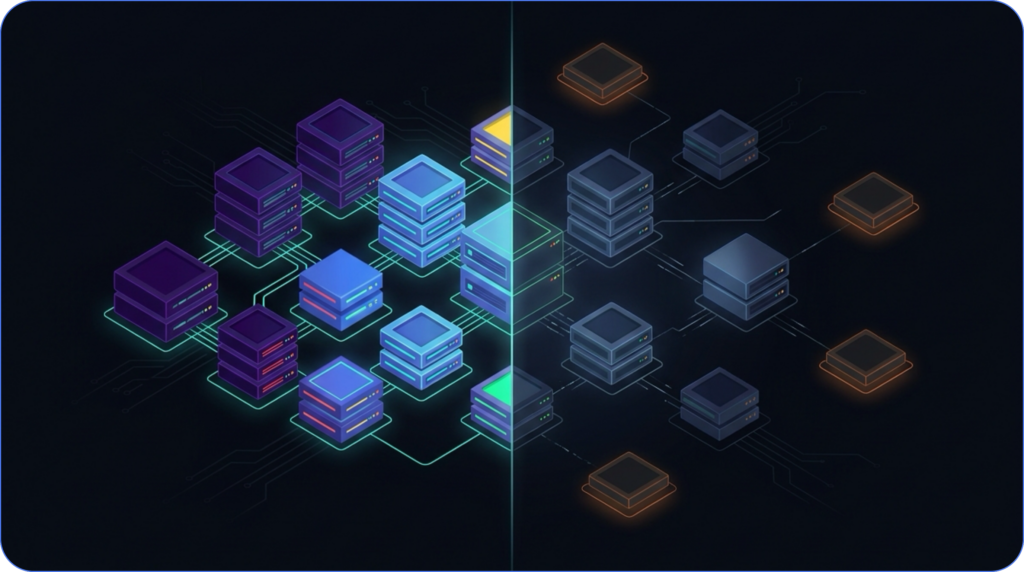
Netwrix’s shadow AI framework organizes the exposure into three dimensions: data visibility (what data are AI tools touching), identity visibility (who is using which tools), and risk-based classification (is that tool a low-risk productivity aid or a critical-risk system processing regulated data). Organizations that can’t answer those three questions about their AI tooling are already operating with significant audit exposure, regardless of whether a single malicious prompt has ever been issued.
The MCP governance problem sits squarely inside all three dimensions. When a developer installs an unvetted MCP server from a GitHub repository and connects it to a codebase containing proprietary source code or customer data, IT has no data visibility into what that server reads or transmits. There’s no identity record tying that server’s activity to the developer who installed it. Without visibility, there’s no classification, which means no controls, no logging, and no way to demonstrate compliance if an auditor asks.
PurpleSec defines the core AI security risk as “the deviation between human intent and machine execution.” A developer who installs a community MCP server intends to improve their workflow. What the server executes, what data it reads, what external endpoints it contacts, may deviate substantially from that intent, not through any hostile action, but simply because the developer has no mechanism to observe the difference.
Claude Code agents running against community MCP servers, Tavily search integrations, and production error logs represent exactly the kind of compound surface area where that deviation becomes impossible to audit without purpose-built controls.
Supply Chain Risk in a Plugin-First World
OWASP ranks prompt injection as the number one LLM security risk in its 2025 Top 10 for LLMs. That ranking reflects something specific about how these systems work: an AI model’s instruction-following capability, the same property that makes it useful, creates no reliable distinction between legitimate instructions and adversarial ones.
The Injection Surface Grows With Every Plugin
The most dangerous variant isn’t direct injection, where an attacker types malicious instructions into a prompt. It’s indirect injection, which Lakera describes as malicious commands hidden inside external data that the AI processes as part of a normal workflow. The attack doesn’t require access to the model or the developer. It requires access to something the model reads.
PurpleSec names a specific instantiation of this threat: shadow prompting, defined as malicious instructions dormant inside third-party data, documents, or models, designed to activate once ingested by a target organization’s AI system. In a standalone chatbot, that’s a serious risk. In a plugin-first development environment, it’s a structural one.
When a developer installs a community-built MCP server without vetting its data sources, they are connecting Claude Code agents to content pipelines they didn’t write, don’t control, and cannot inspect in real time. A malicious instruction embedded in a documentation source, a dependency feed, or a third-party API response doesn’t announce itself. It waits.
The Blast Radius Problem
What makes this threat category distinct in 2026 is the scope of what an injected instruction can reach. Harmonic Security’s review of Claude Code’s first year documents an ecosystem that now spans code execution, web browsing, file management, and external service integration. These aren’t parallel capabilities; they’re composable ones. An agent that can browse the web, write files, and call external services in a single workflow means a successful injection can chain across all of them.
That expansion of capability is exactly what makes the platform valuable. It also means that MCP governance isn’t just about data exposure. It’s about what a compromised plugin can instruct an otherwise trustworthy agent to do next.
Governance as an Accelerator, Not a Brake
Most security frameworks arrive as friction: approval queues, blocked tool categories, tickets routed to committees that don’t understand what a developer is trying to accomplish. That model doesn’t work against a community plugin ecosystem with hundreds of entries growing faster than any committee can review. Developers route around it, and the shadow AI problem Netwrix documents gets worse, not better, because the controls create incentives to avoid official channels entirely.
A developer who needs web search, production error signals, and a specialized testing agent to complete a feature isn’t asking for permission. They’re asking for access. The difference is significant. Governance, built correctly, is what lets you move faster.
MCP Governance as Infrastructure, Not Policy
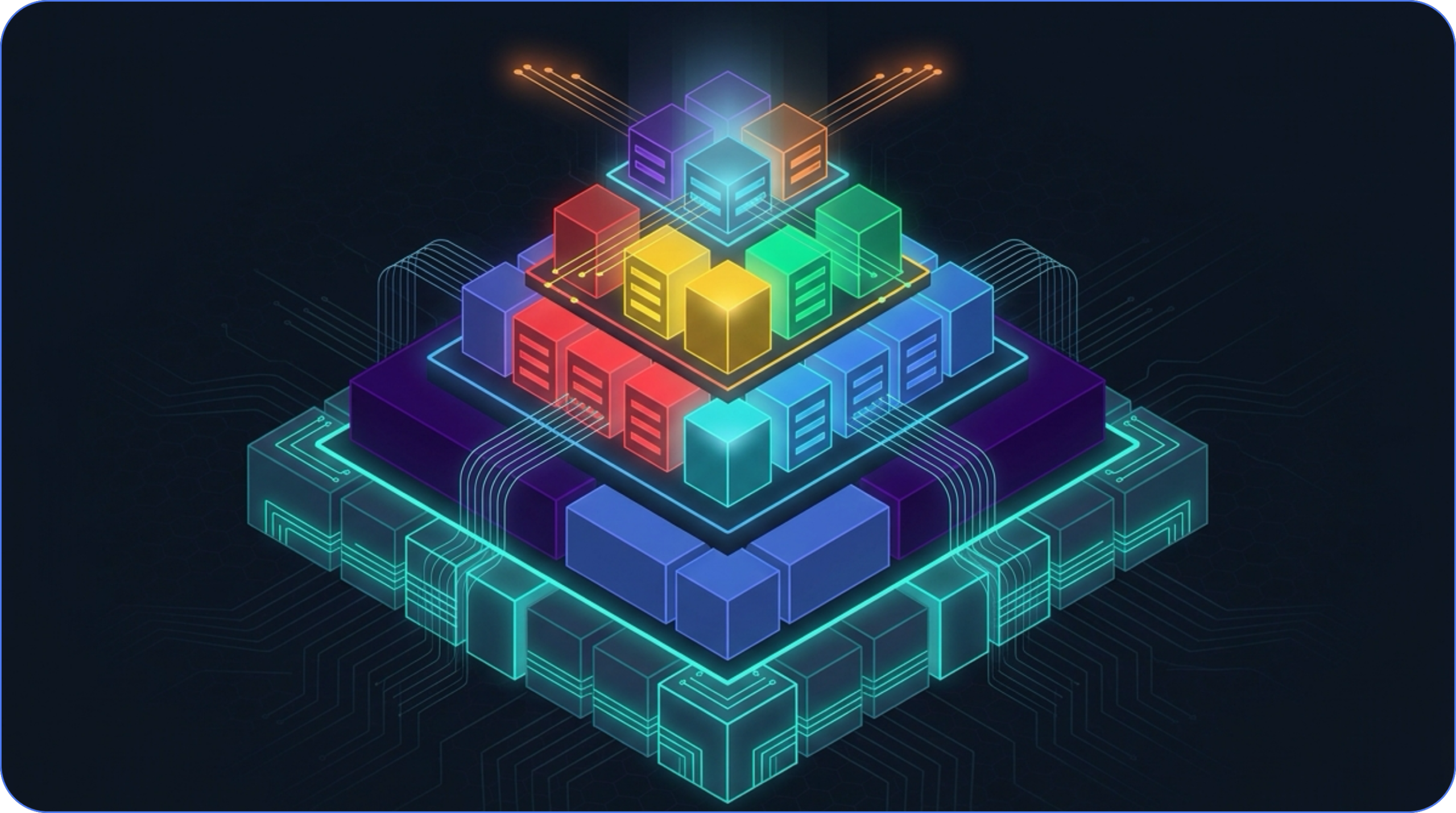
The Obot MCP Gateway is built on that premise. A centralized control plane sits between developers and the MCP server ecosystem, functioning like a package manager with security policy baked in rather than a checkpoint. An approved server appears in a searchable catalog. A developer finds it, connects it, and works. The compliance team gets the audit log. The CISO gets access controls integrated with existing identity providers, whether that’s Okta, Google, or Microsoft Entra.
That identity integration closes the gap Netwrix identifies as the sharpest audit exposure: knowing not just what data AI tools touched, but who was using which tools when. Without identity-aware logging, you have activity without accountability.
The community plugin ecosystem isn’t the problem to be solved. The catalog of approved MCP servers inside the Gateway can include vetted community tools alongside internally developed ones. What the Gateway provides is the vetting layer and the audit trail that make community innovation enterprise-safe rather than enterprise-prohibited. Developers get frictionless access to approved tools. Security teams get visibility, classification, and a compliance posture they can defend.
Run More, Risk Less: Parallel Agents Done Right
Parallel agent workflows are already running. Practitioners composing full stacks around Claude Code describe running five or six agent sessions simultaneously, each handling a different slice of the development lifecycle: a feature branch here, a bug fix there, a content pipeline running alongside.
What’s also real is the coordination problem that emerges at that scale. Developers have been solving it with whatever tools were already in reach: git worktrees to keep working directories separate, lock files to prevent concurrent writes, Postgres tables for session logging. These are competent workarounds assembled by engineers who spotted a gap and filled it, but they’re load-bearing improvisations with subtle failure modes. Two agents writing to adjacent parts of a shared filesystem don’t always conflict loudly. Sometimes they just quietly corrupt each other’s state.
The Isolation Property That Changes the Calculus
Discobot is built for this workflow from the ground up. The core engineering decision is isolation: each parallel agent session runs in its own sandbox environment, with no shared state between sessions by default. A bug-fix agent and a feature-development agent can run simultaneously without any risk of one session’s file writes or dependency changes bleeding into the other’s context. Live browser previews let developers inspect what an agent built without leaving the environment. Built-in terminal access keeps the interaction surface unified. SSH connections to external editors like Cursor mean teams aren’t forced to abandon their existing tooling to adopt the workflow.
For teams managing parallel Claude Code agents across features and pipelines, this is where MCP governance and developer enablement converge: safe parallelism isn’t about slowing agents down or adding approval gates. It’s about building the right isolation primitives so that more agents running simultaneously produces more output, not more risk.
Get Ahead of the Curve
The Claude Code ecosystem is maturing faster than most enterprises have governance frameworks to match. Developers are composing sophisticated stacks, community builders are shipping infrastructure-grade tooling, and the MCP protocol is becoming load-bearing beneath all of it. That trajectory is where the visibility gap, the supply chain risk, and the blast radius problem converge into something that compounds quietly until it doesn’t.
The window for getting ahead of this is still open. The stacks are legible. The threat surface is mappable. The tools to address it exist now, not on a product roadmap.
Treating MCP governance as a foundational infrastructure decision rather than a compliance checkbox to revisit after adoption has scaled gives organizations two things: a security posture they can actually defend, and a development environment where teams can move faster because the rails are already in place. This is also where enterprise AI governance platforms for MCP deployments become increasingly important, providing the visibility and control needed as MCP usage expands across teams and systems. Built correctly, governance and developer velocity are not competing goals. They are the same outcome.