
Learning Center
Agentic AI Development
9 Amazing Model Context Protocol Use Cases in 2026
This is part of a series of articles about Model Context Protocol. What Are Common Uses Cases of Model Context Protocol (MCP)? Model Context Protocol (MCP) is an open interoperability standard for clear, structured communication between AI models, applications, and tools. It offers conventions and specifications for consistent management and exchange of contextual information across […]
MCP Architecture: Components, Lifecycle, and Client-Server Tutorial
What Is Model Context Protocol Architecture? The model context protocol (MCP) architecture defines a structured way to extend the capabilities of large language models (LLMs) beyond their training data. It introduces a standardized communication layer that allows LLMs to interact with external tools, systems, and data sources. MCP architecture enables dynamic and distributed integration of […]
MCP Gateway: How It Works, Capabilities and Use Cases
This is part of a series of articles about Model Context Protocol. What Is a Model Context Protocol Gateway? A Model Context Protocol (MCP) gateway is an intermediary layer that simplifies how AI applications connect to multiple MCP servers. It acts as a single point of entry for AI agents like Claude or ChatGPT to […]
How MCP Servers Work, Use Cases and Notable Examples
What Is an MCP Server? This is part of a series of articles about Model Context Protocol. MCP servers are applications that expose AI agents to tools and services through the standardized Model Context Protocol (MCP), acting as a bridge between AI models and external data or functionality. They allow AI models to use tools […]
AI Agent Frameworks: Components & Top 5 Open Source Solutions
What Are AI Agent Frameworks? AI agent frameworks are software libraries or platforms that support the development, deployment, and management of intelligent agents. These agents can autonomously perceive their environment, make decisions, and perform tasks to achieve specific goals, often powered by machine learning, deep learning, or rule-based approaches. Frameworks provide reusable tools and standardized […]
Top 10 RAG Tutorials in 2024 + Bonus LangChain Tutorial
What Is Retrieval Augmented Generation (RAG)? Retrieval-augmented generation (RAG) combines large language models (LLMs) with external knowledge retrieval. Traditional LLMs generate responses based solely on pre-trained data. With RAG, the model can access updated and specific information at the time of inference, providing more accurate and context-rich responses. This method leverages repositories of external data, […]
What Are AI Agents? Complete 2024 Guide
What Are AI Agents? AI agents are software entities that perform tasks autonomously. They make decisions based on predefined rules, machine learning models, or a blend of both. Their design centers around achieving specific goals without constant human intervention. These agents can range from simple mechanisms executing repetitive tasks to complex systems navigating dynamic environments […]
RAG vs. LLM Fine-Tuning: 4 Key Differences and How to Choose
What Is RAG (Retrieval-Augmented Generation)? Retrieval-Augmented Generation (RAG) merges large language models (LLMs), typically based on the Transformer deep learning architecture, with retrieval systems to enhance the model’s output quality. RAG operates by fetching relevant information from large collections of texts (e.g., Wikipedia, a search engine index, or a proprietary dataset) and fuses this external […]
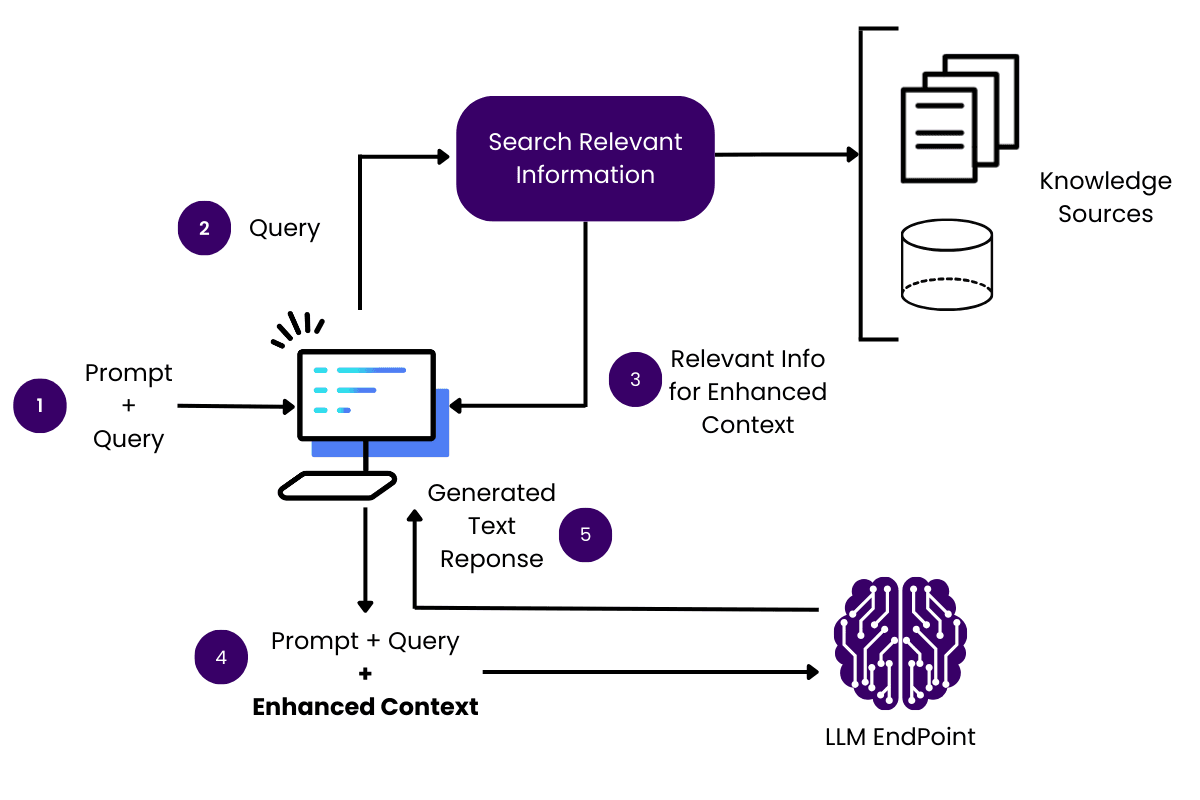
Understanding RAG: 6 Steps of Retrieval Augmented Generation (RAG)
What Is Retrieval Augmented Generation (RAG)? Retrieval Augmented Generation (RAG) is a machine learning technique that combines the power of retrieval-based methods with generative models. It is particularly used in Natural Language Processing (NLP) to enhance the capabilities of large language models (LLMs). RAG works by fetching relevant documents or data snippets in response to […]